How to price a day
A screen has a day.
That day has a price. Everything else in Foro — a morning, a lunch, a full day, a busier place, a larger buy — is a way of selling that day without letting the valuable hours be picked off and the rest left behind.
Open Pricing. The chip beside the logo says whose price you are looking at. Foro is the starting point. A network follows it until someone on that network saves their own.

There are two honest ways to arrive at that number.
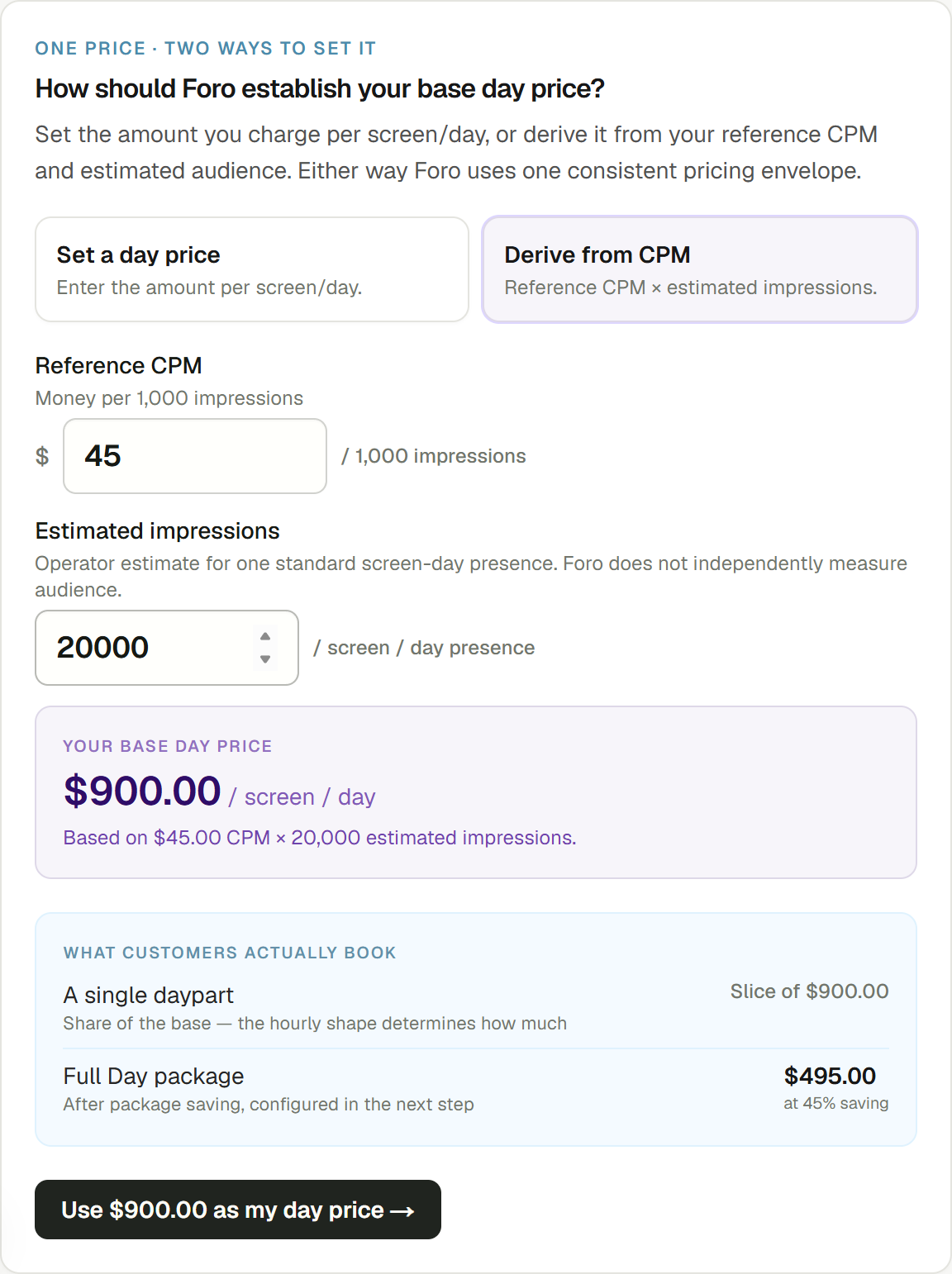
You can type the day price. Or you can start from a CPM you already use when you talk to buyers, and an estimate of how many impressions one screen delivers in a day. Foro multiplies those and stores the result as the same day price.
CPM is the guide. The day is what you sell. An impression estimate can be revised later. The booking does not have to be.
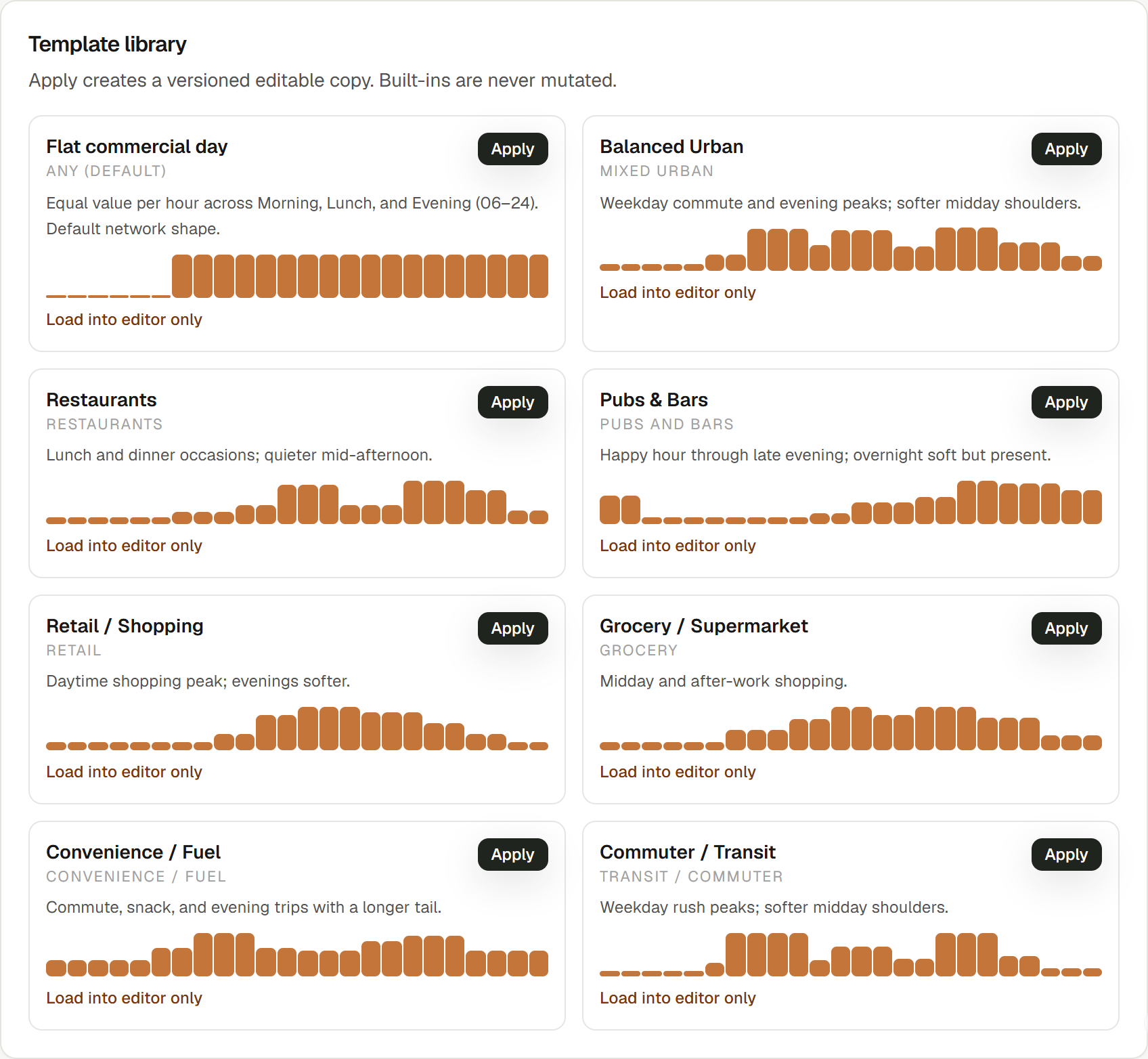
Once the day has a price, the hours inside it are not equal. A flat curve treats the commercial day as one thing. A retail curve puts more of the price into the afternoon. A restaurant curve puts it into lunch and the evening.
The curve does not raise the day. It moves the day around. Morning, lunch and evening still add back to the same rack. Change the base if you want the whole day to cost more.

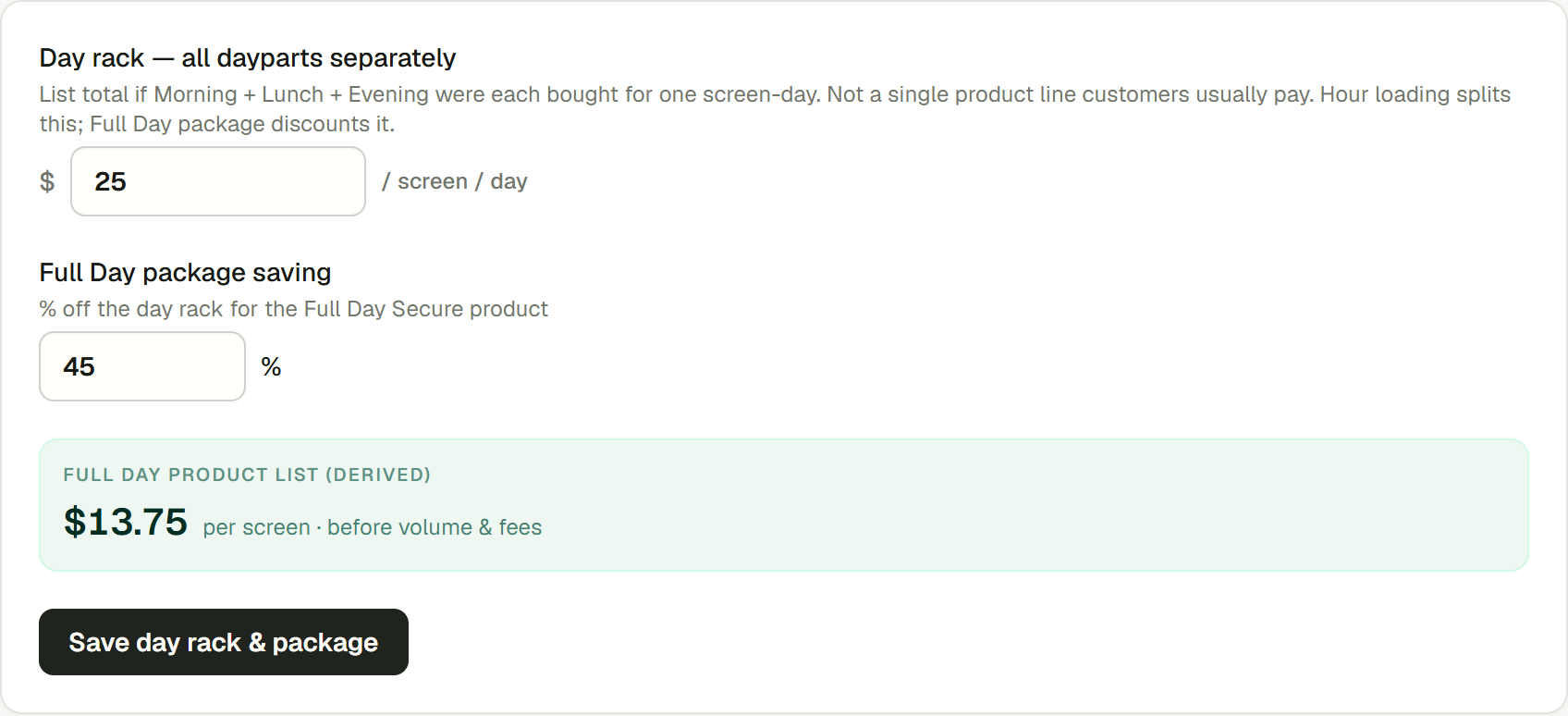
Full Day is the product that protects the day. If a buyer could take only the expensive hours at the hour price, the quiet hours would be left with nothing to stand on. Full Day is priced below the sum of the three dayparts, on purpose.
Here the rack is $25. The Full Day saving is 45%. The price a customer pays for the whole commercial day is $13.75 per screen, before a large buy is softened and before Foro’s handling fee.
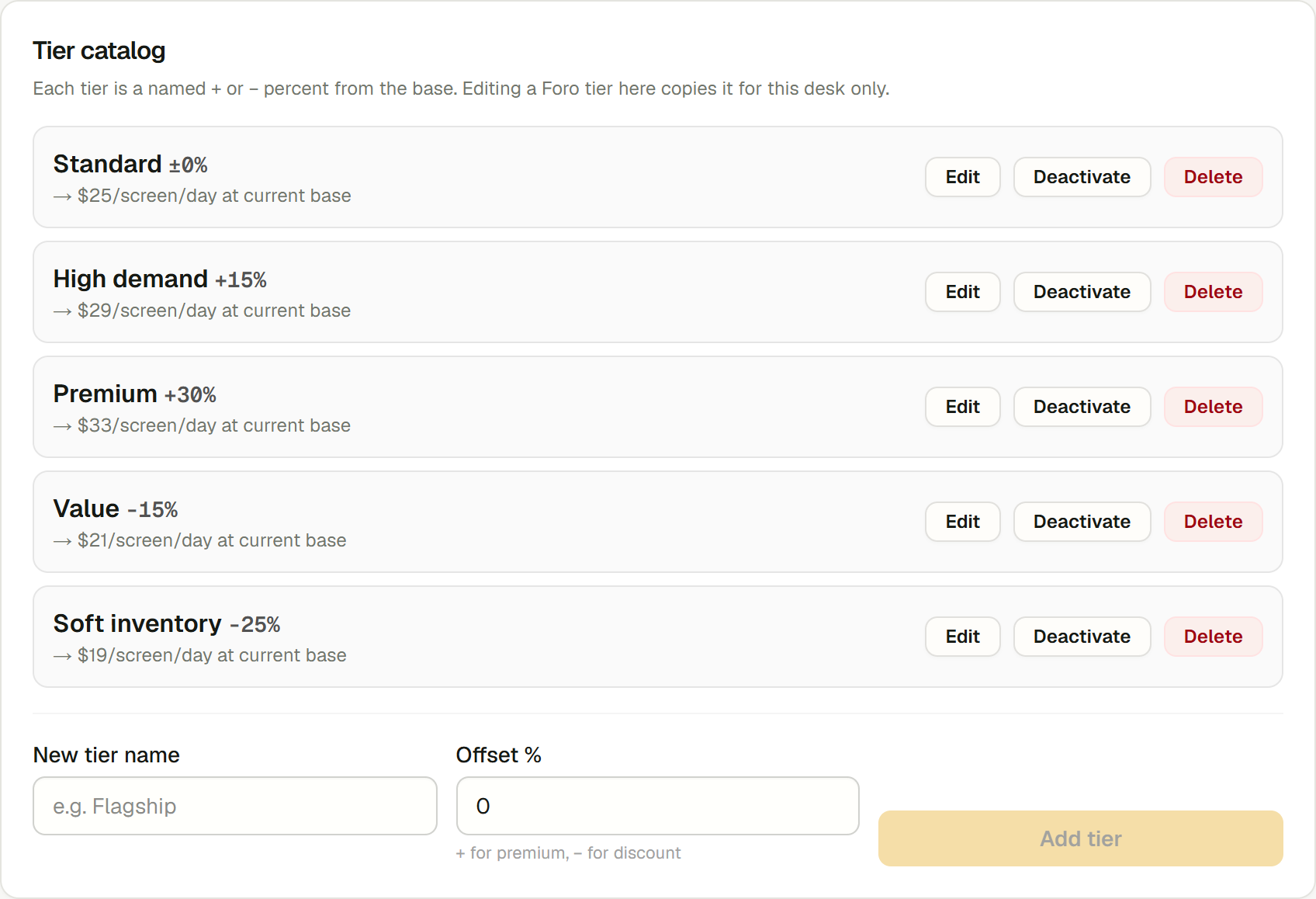
Places are not identical. A tier is a named percent above or below the base. High demand at +15% is $29 on today’s base. Soft inventory at −25% is $19. The curve and the Full Day package then apply on top of that place.
A screen can keep its own tier. Otherwise it uses the place. Editing a Foro tier here does not change every network. It copies the tier for the desk you are in.
Volume is the last commercial softening, and it is about the size of the buy. It comes off the package price, a small percent for each thousand commercial minutes, and it stops at a floor. Zero turns it off.
The handling fee is not this dial. Foro sets that. You can see what it added after a campaign is committed. You do not use it to make a day cheaper.

A useful order, if you are setting a network up:
Decide the day. Use a CPM you already believe in if that is how you talk about the audience, or type the day if you already know it.
Choose a shape that matches the place. Flat is a fine start. Retail, food, and transit are there when the hours are obviously not equal.
Set the Full Day saving so taking the whole day is the sensible buy, and taking only the peak is not a bargain that strands the rest.
Add a tier only where a place is genuinely worth more or less than the network’s ordinary screen. Leave the rest on the base.
Turn volume on when a large footprint should cost less per minute than a small one. Leave it at zero when you would rather keep the rate plain.
Then stop. A field you never touch keeps following Foro, including later changes to that field. The buyer still books screens, dates, and a share of the loop. The CPM is how you explain the price. It is not a second thing you sold.